
Software
AI Bookkeeping Software: What Actually Works in 2026
AI now handles the boring half of bookkeeping. Here's which tools do it well, what they cost, and where humans still matter.

The best software for business and life. Honest comparisons, buying guides, and tool reviews to help you pick the right stack with confidence.
AI now handles the boring half of bookkeeping. Here's which tools do it well, what they cost, and where humans still matter.

AI that writes your status updates and spots slipping deadlines: we tested 8 PM tools to see which ones earn their subscription.

We ran nine CRMs through real sales pipelines for six weeks to find which ones small teams actually stick with.

Late payments kill more small businesses than competition. These invoicing tools get you paid faster, with less chasing.

Zapier's task pricing punishes success. These seven automation tools do the same work for a fraction of the bill.
New to this topic? These three guides are the fastest way to get up to speed.
A CRM isn't a database — it's a revenue operating system. The right choice depends on your motion: sales-led (outbound, high-touch) → Pipedrive, Close, HubSpot Sales Hub; product-led (self-serve, volume) → Attio, Folk, HubSpot free; relationship-led (consulting, agencies, high-ticket) → Copper, Dex, Notion + workflow. Solo to 5 people: start with a spreadsheet or Notion database; graduate when follow-ups slip. 5-50: HubSpot (free tier generous, scales), Pipedrive (visual pipeline, great mobile), Attio (modern, flexible). 50+: Salesforce (expensive, customizable, requires admin), HubSpot Enterprise. Key eval criteria: email integration (auto-logging), pipeline customization, reporting that answers "what's closing this month?", mobile app quality, API for custom workflows. Hidden costs: onboarding ($2-10K for Salesforce), per-seat minimums, contact tiers, migration. Implement in phases: contacts → deals → activities → automation → reporting. Adoption fails when reps see it as surveillance, not support.

Spreadsheets work until they don't — usually at $100K revenue, first employee, or first audit. QuickBooks Online dominates US market (80%+ share) — robust, accountant-friendly, integration ecosystem. Xero: cleaner UI, better bank feeds internationally, stronger inventory. Wave: free, good for solo/service, limited scaling. FreshBooks: invoicing-first, great for freelancers, weaker accounting. NetSuite: $50K+/year, for 100+ employees with complex needs. Must-haves: bank feed reconciliation, invoicing + payments, expense tracking (receipt capture), payroll integration, 1099 contractor management, multi-currency if international, accountant access. Cost: $30-90/month core, +$4-12/employee for payroll, +payment processing (2.9% + $0.30). Set up chart of accounts once with a CPA — fixing later costs 10x. Reconcile weekly. Review monthly P&L, not annually.

The best PM tool is the one your team opens voluntarily. For software/engineering: Linear (opinionated, fast, developers love it), Jira (configurable, enterprise, developers tolerate it), GitHub Projects (integrated, improving). For marketing/creative/ops: Asana (balanced, good workflows), ClickUp (feature-packed, can overwhelm), Notion (flexible, requires structure), Monday.com (visual, expensive at scale). For agencies/client work: Teamwork (client portal, time tracking), Accelo (end-to-end service ops). Solo/small: Trello (simple kanban), Todoist (tasks, not projects). Evaluate on: task hierarchy (epic → story → task), views (list, board, timeline, calendar), dependencies, time tracking, client access, automation (rules, templates). Cost: $0-15/user/month typical; enterprise $30+. Migration pain is real — export/import loses history. Run a 2-week pilot with real projects before committing.

Slack/Teams replaced email for internal chat — but created always-on culture. Default to async: write it down (Notion, GitHub, Linear, Loom), tag relevant people, allow 24h response. Meetings for: decisions, debates, relationship-building, complex alignment. Tools: Slack (best integrations, search, huddles), Teams (Microsoft ecosystem, included in 365), Discord (community, voice-first), Twist (async-first, threaded). Video: Zoom (reliable, recording, AI companion), Google Meet (included, simple), Loom (async video, huge time-saver). Calendar: Calendly/Cal.com for scheduling, Reclaim/Clockwise for focus time protection. Cost: $0-15/user/month. Rule: if a Slack thread hits 10 replies, it should have been a doc or a 15-min call. Document decisions in writing; chat is ephemeral.

Before evaluating tools, define: the problem (specific, measurable), the users (who, how many, technical comfort), the budget (annual, including implementation), the must-haves (3-5 non-negotiables), the nice-to-haves. Score each tool 1-5 on must-haves, weight by importance. Run a paid pilot with real data and real users for 2 weeks. Check: data export (CSV, API), SSO/SCIM (if 50+), compliance (SOC2, GDPR, HIPAA), support SLA, roadmap alignment. Negotiate: annual discount (10-20%), non-profit/education pricing, startup credits (AWS, Stripe, HubSpot have programs). Set a review date 6 months post-implementation — if adoption <80%, fix or switch. The cost of wrong software isn't the subscription — it's the lost time, bad data, and team frustration.
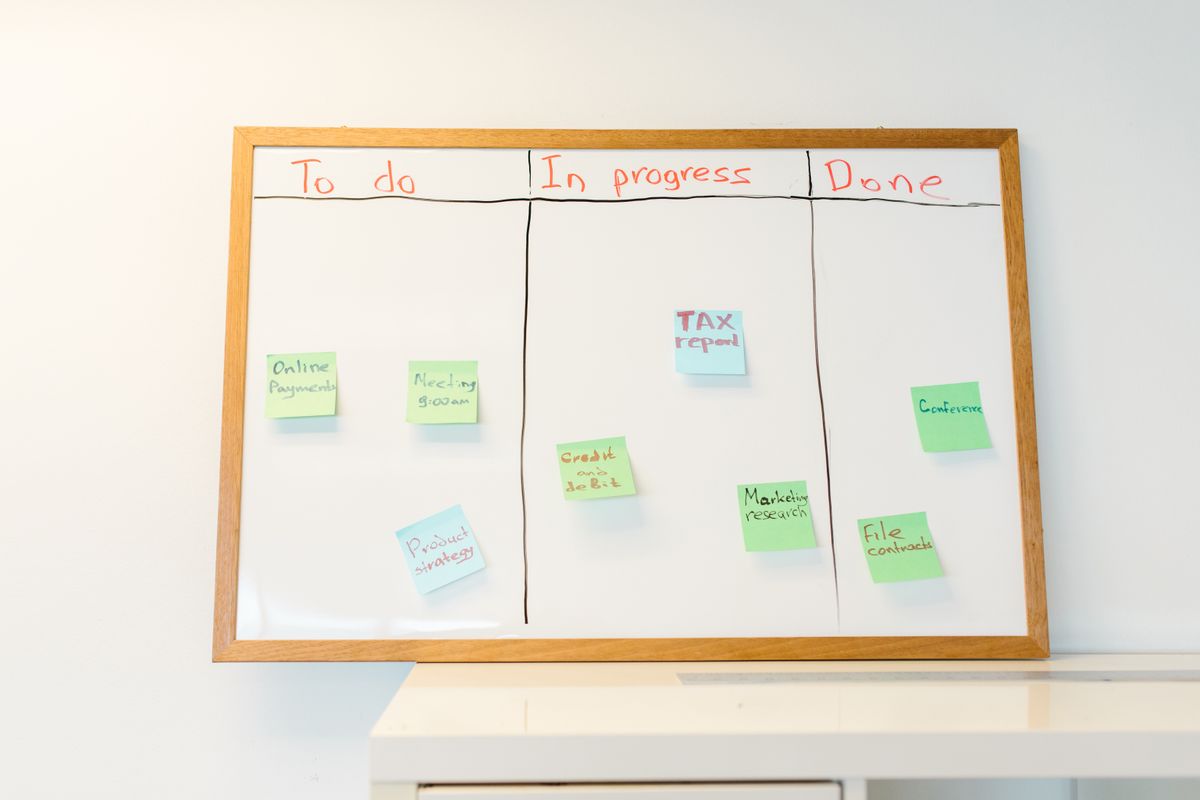
When: multiple people need access, data relationships get complex (customers → deals → activities), reporting takes >30 min to compile, errors slip through, or you're spending >2 hours/week maintaining the sheet. Usually $100K ARR or 3+ team members.
Quarterly audit: list every tool, owner, cost, active users, last login. Cancel unused. Consolidate overlapping (separate project + task + wiki → Notion). Centralize purchasing — one person approves new subscriptions. Set a SaaS budget (% of revenue) and stick to it.
Free tiers are acquisition funnels. Limits hit at the worst time: contact caps, email send limits, API restrictions, no SSO, no support, no audit logs. Migration cost (time, data loss, retraining) far exceeds the subscription you delayed. Use free to evaluate; pay before you depend on it.
All-in-one (HubSpot, Zoho, Bitrix24): lower integration friction, single bill, weaker individual modules. Best-of-breed: stronger features, higher integration cost, multiple vendors. Early stage: all-in-one wins on speed. Scaling: best-of-breed wins on depth. Hybrid: all-in-one core (CRM + marketing), best-of-breed for specialties (accounting, PM).
Involve them in selection. Pilot with volunteers. Train in 15-min sessions, not hour-long webinars. Create quick-reference cheat sheets. Celebrate early wins publicly. Make the old way harder (archive the spreadsheet). Adoption is a leadership behavior, not a feature request.
You don't need every tool. You need the right tools for your stage, team, and motion. Start with the revenue engine (CRM + accounting), add PM when projects slip, add communication when async breaks down. Audit quarterly. The best stack is the one you barely notice — it just works.
Relevant ads will appear here once AdSense is connected.