Everything you need before you buy your first rental property in 2026: how much cash you really need, the math that separates good deals from money pits, financing options that actually exist, and the mistakes that wreck first-timers.
Buy a 2-4 unit property with 3.5% down, live in one unit, and let the other tenants cover your mortgage. Here's exactly how it works, what it costs, and where it falls apart.
You don't need a down payment to earn real-estate money. These six side hustles pay you from other people's property — and every one of them can be started in a single weekend.
City after city is rewriting the rules on short-term rentals, but the numbers can still work if you buy in the right place and know the mid-term pivot.
Sep 2, 2026·15 min read
Start here
New to this topic? These three guides are the fastest way to get up to speed.
Finance & Investing — real estate is a financial asset; understand the numbers first.
The "renting is throwing money away" mantra ignores opportunity cost, maintenance, transaction costs, and mobility. The buy vs. rent decision is a financial model, not a moral choice. Key variables: price-to-rent ratio (buy if <15, rent if >20, gray zone 15-20), years in home (break-even typically 5-7 years after 6% buying + 6% selling costs), down payment opportunity cost (invested at 7-10% vs. home appreciation 3-5%), tax benefits (mortgage interest + property tax deduction only if itemizing > standard deduction), maintenance (1-2% of home value/year). NYT and Kahneman calculators include these factors. Rule of thumb: if you'd stay 7+ years, have 20% down + 6 months reserves, and total housing cost <28% gross income — buy. Otherwise, rent and invest the difference. The wealthiest renters often outpace leveraged homeowners over 20 years.
Rental Property Investing: Cash Flow Is King
Appreciation is speculation; cash flow is insurance. Target: 1% rule (monthly rent ≥ 1% of purchase price) for quick screen; deeper analysis: cap rate (NOI / price) >5% in most markets, cash-on-cash return (annual pre-tax cash flow / cash invested) >8-10%, DSCR (debt service coverage ratio) >1.25 for financing. Expenses: vacancy 5-8%, maintenance 1-2%, property management 8-10%, CapEx reserves 5-10%, insurance, taxes, HOA. Single-family: easier financing, better appreciation, harder to scale. Multi-family (2-4 units): residential financing, economies of scale, owner-occupy house hack. 5+ units: commercial lending, different metrics. Short-term rental: 2-3x long-term revenue, 2-3x management intensity, regulatory risk. Analyze 50 properties, make offers on 10, close 1. Never buy on pro forma — use actual trailing 12-month financials.
REITs and Passive Real Estate: Exposure Without Toilets
REITs (Real Estate Investment Trusts) trade like stocks, pay 90%+ taxable income as dividends, offer instant diversification and liquidity. Types: equity (own properties), mortgage (own debt), hybrid. Sectors: residential (apartments, manufactured housing), industrial (warehouses, logistics — strongest tailwind), retail (malls declining, necessity-based stable), office (structural headwinds), healthcare, data centers, self-storage. Public REITs: VNQ (broad), SCHH (low cost), individual names (O, PLD, VICI, WPC). Private REITs: Fundrise, RealtyMogul, CrowdStreet — higher minimums ($10-25K), illiquid (5-10 years), higher fees (1-2%+), less transparency. Fractional platforms: Arrived, Ark7 — $100-500 entry, single properties. Tax: REIT dividends taxed as ordinary income (not qualified) — hold in IRA/401(k). Passive vehicles suit: < $50K capital, no time for management, want diversification, need liquidity.
Mortgages: The Product You'll Pay for 30 Years
A 0.25% rate difference on $400K = $60/month = $21,600 over 30 years. Shop 3-5 lenders (banks, credit unions, brokers, online) on same day — rates change daily. Compare APR (includes points, fees), not just rate. Loan types: conventional (3-20% down, PMI <20%), FHA (3.5% down, MIP for life), VA (0% down, funding fee, veterans only), USDA (0% down, rural), jumbo (>$766,550 most areas). Fixed 30-year: standard, predictable. Fixed 15-year: lower rate, higher payment, massive interest savings. ARM (5/6, 7/6, 10/6): lower initial rate, adjusts every 6 months after fixed period — only if selling/refinancing before adjustment. Rate buydown: 1 point = 1% loan amount = ~0.25% rate reduction — breakeven 5-7 years. Lock rate 30-60 days; float-down if rates drop. Read the Loan Estimate page 2 — that's where junk fees hide.
Tax Advantages: The Hidden Wealth Builder
Real estate tax code rewards owners. Depreciation: residential 27.5 years, commercial 39 years — paper loss offsets rental income, often creating tax-free cash flow. Cost segregation study: reclassify 20-30% of property to 5/7/15-year assets — accelerate $50-150K depreciation in year 1 on $500K property; cost $3-5K, ROI 10-20x. 1031 exchange: defer capital gains by swapping like-kind investment property — 45-day identification, 180-day close, qualified intermediary required. Opportunity Zones: defer + reduce + eliminate gains on long-term holds in designated tracts. Passive activity loss rules: $25K allowance phases out $100-150K AGI — real estate professional status (750 hrs + material participation) unlocks unlimited. Step-up basis at death: heirs get fair market value basis, erasing deferred gains. Work with a RE-specialized CPA — generalists miss 80% of these.
Frequently Asked Questions
Is now a good time to buy real estate?
Time in market > timing the market. If your numbers work (cash flow, reserves, hold period), buy. If you're betting on appreciation to bail out negative cash flow, don't. Rates may drop (refinance later) or rise (lock now). Inventory may rise (more choices) or stay tight (competition). Control what you can: your criteria, your analysis, your reserves.
How much money do I need to start investing in rental property?
House hack (owner-occupy 2-4 unit): 3.5-5% down ($15-25K on $500K). Conventional investment: 20-25% down + 6 months reserves + closing costs (2-3%) = $150K+ on $500K. REITs/fractional: $100-500. Scale matches capital — don't stretch into a deal that leaves you broke.
What's the 1% rule and does it still work?
Monthly rent ≥ 1% of purchase price. Quick filter, not a decision rule. In 2026, 1% is rare in coastal metros (0.5-0.7% common), achievable in Midwest/Sun Belt. Use it to narrow 100 listings to 10; then run full pro forma on the 10.
Should I pay off my mortgage early?
Mathematically: if mortgage rate < expected investment return (7-10%), invest instead. Psychologically: debt-free peace of mind has value. Compromise: pay extra on mortgage only after maxing tax-advantaged accounts and high-yield savings. Never pay extra if you lack 6-month reserves or carry higher-rate debt.
How do I analyze a rental property deal?
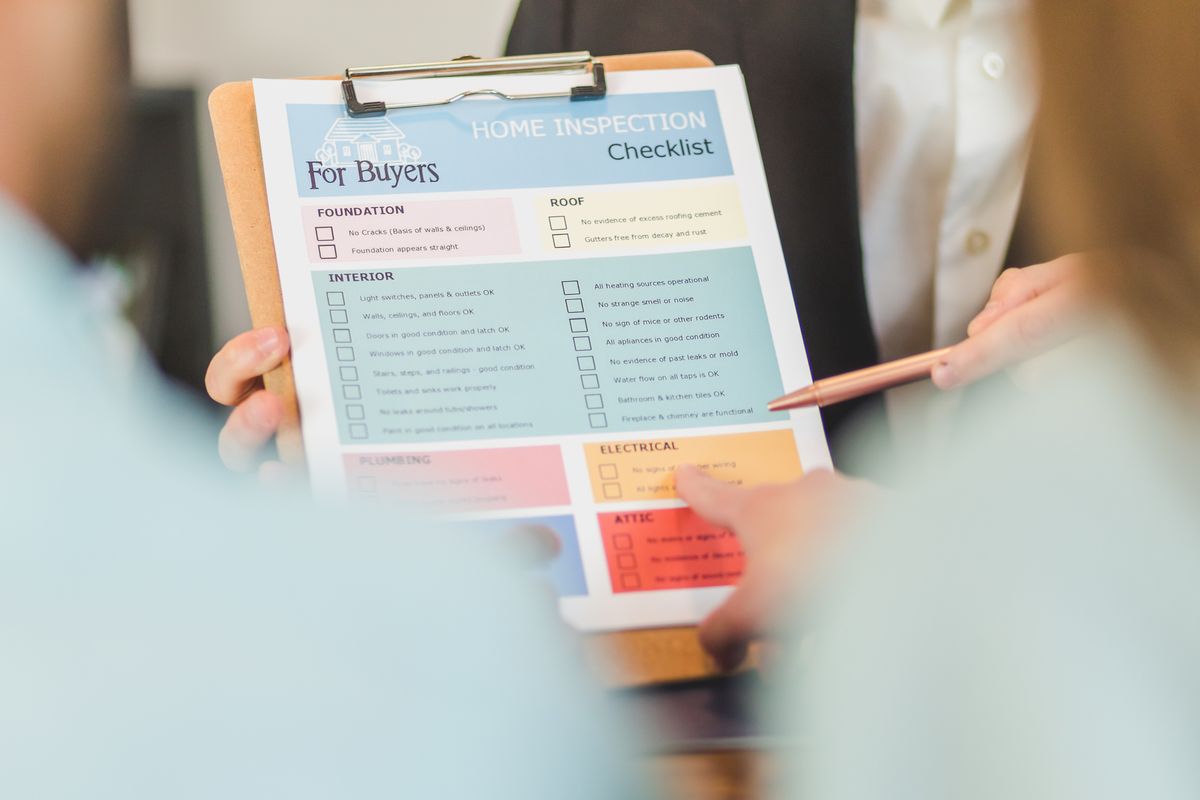
1) Get actual T12 financials (not pro forma). 2) Verify rent roll, lease terms, expenses. 3) Calculate NOI (income - operating expenses, no mortgage). 4) Apply cap rate for value. 5) Model cash flow with your financing. 6) Stress test: 10% vacancy, 20% expense increase, 1% rate adjustment. 7) Inspect physically — roof, HVAC, foundation, systems. 8) Review neighborhood trends, crime, schools, employment. 9) Make offer with inspection + financing contingencies.
Start With the Numbers
Real estate is a spreadsheet that occasionally requires a hammer. Learn the math first — cap rates, cash-on-cash, DSCR, depreciation, 1031 mechanics. Then look at properties. The deals that pencil out on paper are the only ones that work in reality. Run the numbers on three properties this week. You'll learn more than months of browsing.
Advertisement
Relevant ads will appear here once AdSense is connected.