12 AI-Proof Careers That Will Still Pay Well in 2030
AI is replacing tasks, not whole jobs. But some careers are far safer than others. Here's where to build, backed by 2026 data.
Relevant ads will appear here once AdSense is connected.
In 2024, a copywriter friend watched AI tools do in seconds what used to take her a morning. She didn't panic. She changed what she sold: instead of blog posts, she started selling content strategy, brand voice development, and the judgment calls AI fumbles. Her income went up, not down.
That's the real story of AI and jobs. The World Economic Forum's Future of Jobs Report projects 92 million roles displaced by 2030, but 170 million new ones created: a net gain of 78 million. The pain is real and uneven. The opportunity is real too. The difference between the two is which side of the task divide you stand on.
Here's the framework that matters: AI replaces tasks, not jobs. Less than 5% of occupations are fully automatable with current technology, but about 60% have partial task exposure. Careers built on physical dexterity, emotional intelligence, and judgment in unpredictable situations are the hardest to automate. These twelve sit firmly on the safe side, with the salary data to prove they're worth pursuing.
1. The framework: what AI actually can't do
Before the list, understand the pattern. It'll help you evaluate any career, including ones not listed here. AI struggles with four things: physical work in unpredictable environments, genuine emotional connection, moral and legal accountability, and novel problem-solving with incomplete information.
That's why 2025 hiring data already shows the split: administrative role hiring fell 35.5% year over year, and entry-level hiring dropped 73.4%, while AI and machine learning hiring grew 88%. The jobs disappearing are repetitive, rules-based, screen-bound tasks. The jobs growing either build the AI or do things AI fundamentally can't.
The wage signal confirms it. PwC's 2026 Global AI Jobs Barometer found workers with AI skills command a 56% wage premium, more than double the 25% premium a year earlier. The market is screaming the answer: learn to work with AI, or work where AI can't follow.
2. Skilled trades: the safest bet nobody talks about
No career category resists automation better than skilled trades. The reason is physical: AI operates through software. A plumber diagnosing a burst pipe in a 1960s crawl space has to physically be there, fit in a cramped space, and solve something new every time. That's the opposite of what AI is optimized for.
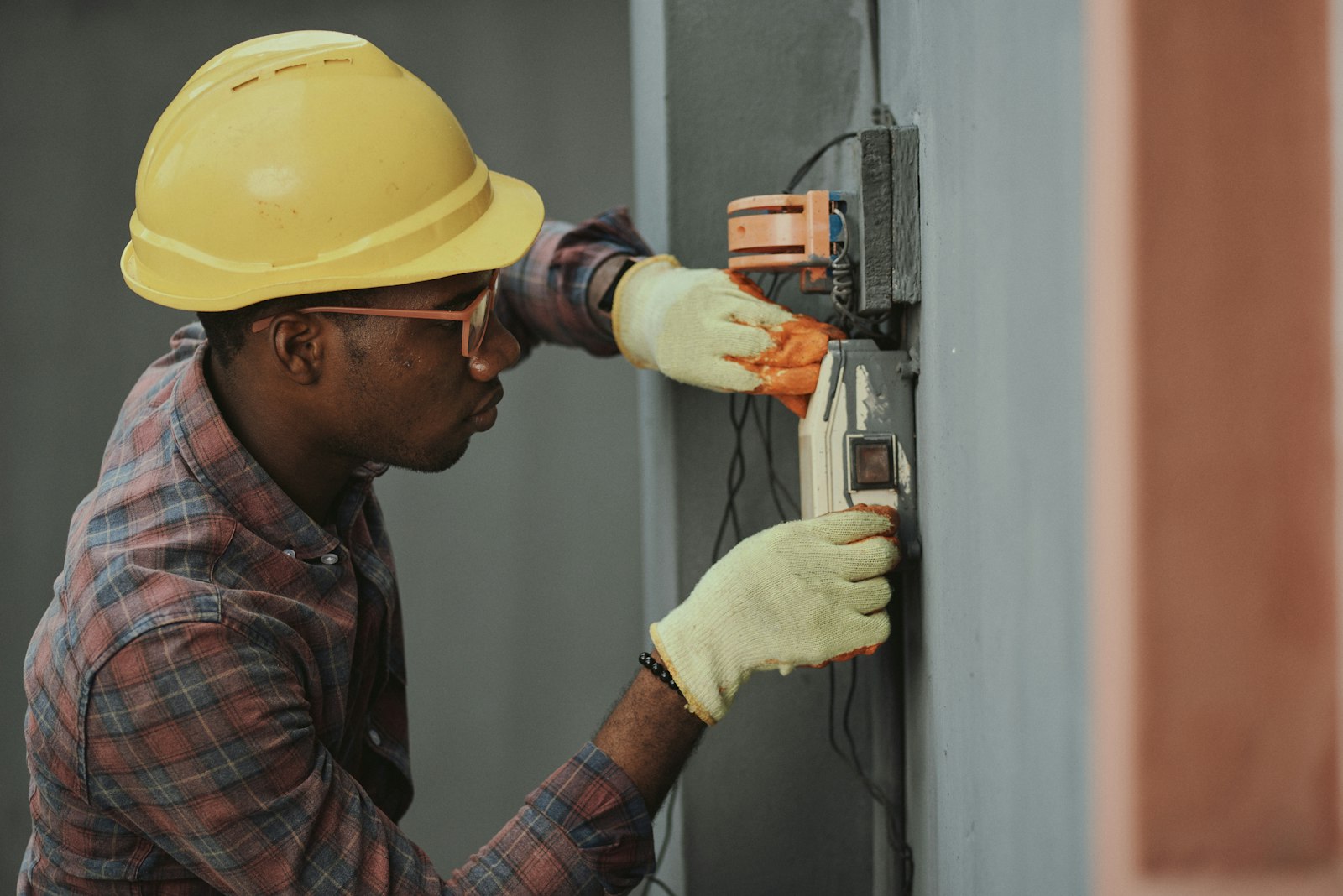
1. Electrician. Median pay around $62,000, with experienced electricians reaching $106,000. The Bureau of Labor Statistics projects 11% job growth through 2032, adding over 80,000 jobs. The bigger story is the shortage: there aren't enough electricians, which keeps pushing wages up. Wrong wiring can kill people, so this work will always need licensed human judgment on site.
2. Plumber. Similar growth story at 11%+ projected growth. Every building is different, every leak is a new puzzle, and the work is safety-critical. Master plumbers running their own shops routinely clear six figures.

3. HVAC technician. Heating and cooling systems are getting more complex, not less, with heat pumps and smart controls. Technicians who understand both the mechanical and digital sides are in short supply.
4. Elevator mechanic. One of the highest-paid trades, often overlooked. Specialized, safety-critical, and impossible to do remotely. Training programs are short compared to a four-year degree, and the pay reflects the specialization.
The trades path is faster than most people think. Apprenticeships pay while you learn, licensing takes 2 to 4 years, and you graduate with zero student debt into a market begging for workers. Compare that to a $100,000 degree for an entry-level desk job that AI is currently eating.
3. Healthcare: empathy plus judgment
Healthcare tops every AI-resistance ranking for a simple reason: no machine can replace human trust, physical care, or diagnosis under uncertainty. These roles also sit on global shortage lists, which means strong pay and even immigration pathways in countries like Canada, Australia, and the UK.
5. Nurse practitioner. Median salary around $126,000, with automation risk near zero. NPs diagnose, prescribe, and manage patient relationships. An aging population guarantees demand for decades.
6. Physical and occupational therapist. Hands-on rehabilitation requires reading bodies in real time, adjusting to pain responses, and motivating humans through hard recoveries. High growth, deeply human, well paid.

7. Mental health professionals. Psychologists, counselors, and therapists do work that is fundamentally relational. AI chatbots can supplement, but the therapeutic alliance, the trust between practitioner and patient, is the treatment. Demand keeps climbing while supply lags.
8. Specialized physicians and dentists. Neurologists (median ~$224,000), surgeons, and dentists combine years of training with physical procedures and life-or-death judgment. AI assists their work; it doesn't replace the accountability.
4. Tech roles that manage the machines
Here's the twist: some of the safest tech careers are the ones closest to AI itself. Somebody has to build, secure, and manage these systems, and that somebody is human.
9. Cybersecurity analyst and engineer. BLS projects 32% growth through 2032, among the fastest of any profession. AI helps spot known attack patterns, but anticipating novel attacks requires thinking like a human adversary. It's creative, adversarial, high-stakes work that keeps evolving as attackers evolve.
10. AI/ML engineer and AI orchestrator. The people building AI systems are the last ones AI replaces. Upwork's 2026 Future Workforce Index identified an emerging premium role: the AI orchestrator, who connects tools to strategy and automation to human judgment. Lower-complexity AI tasks are getting cheaper; complex AI-augmented professional work is getting more valuable. Position yourself on the complex side.
| Career | Why AI can't replace it | Typical pay range | Entry path |
|---|---|---|---|
| Electrician | Physical work, safety-critical judgment | $62K–$106K | Paid apprenticeship, 2–4 yrs |
| Nurse practitioner | Trust, diagnosis, physical care | $126K+ | Nursing degree + NP program |
| Cybersecurity analyst | Adversarial thinking, novel threats | $110K–$160K | Certs (Security+, CISSP) + experience |
| Plumber / HVAC tech | Unpredictable physical environments | $55K–$95K | Apprenticeship, 2–4 yrs |
| Therapist / counselor | Human relationship is the treatment | $60K–$110K | Master's + license |
| AI/ML engineer | Builds the systems themselves | $160K–$225K | CS background + ML specialization |
5. Human-judgment careers: law, leadership, craft
11. Trial attorneys and specialized lawyers. Legal research is increasingly AI-assisted, but courtroom advocacy, negotiation, and counseling clients through life-altering decisions require persuasion, ethics, and accountability. A client facing prison wants a human standing next to them.
12. Skilled craftspeople and creative directors. Chefs, master carpenters, and creative directors do work where taste, physical skill, and novel judgment are the product. AI can generate options; it can't take responsibility for the vision. The premium end of every craft keeps rising precisely because the commodity end got automated.

Notice the pattern across all twelve: they combine something AI can't do with something the market pays for. Physical presence plus judgment. Emotional depth plus expertise. Accountability plus creativity. If your career has two of those, you're in good shape.
6. How to move into an AI-resistant career
Convinced? Here's the practical path. First, audit your current role with the task test: list your weekly tasks, mark which ones AI could do today, and see what's left. If less than 30% of your work is AI-resistant, you need a plan.

Second, pick your lane using the one-variable rule from our career switch guide: change industry, function, or context, but only one at a time. A customer support rep moving into cybersecurity changed function. An office manager training as an electrician changed function too. Both kept their adult lives intact while pivoting.
Third, get AI-fluent regardless of your lane. The 56% wage premium for AI skills applies across fields. A plumber who uses AI for quoting and scheduling beats one who doesn't. An NP who uses AI scribes sees more patients. AI literacy is becoming like computer literacy in the 2000s: not a job, but a multiplier on every job.
Finally, negotiate your entry properly. Career switchers chronically under-negotiate, so read our 2026 salary negotiation playbook before accepting anything. And if you'd rather build independence than find an employer, our freelance career guide shows the other path. More at our Career hub.
Relevant ads will appear here once AdSense is connected.
FAQ
Will AI really replace 92 million jobs by 2030?
That's the World Economic Forum's projection for roles displaced, but the same report projects 170 million new roles created: a net gain of 78 million. The disruption is real but so is the creation. Which side you land on depends on your skills, not luck.
What is the single safest career from AI?
Skilled trades like electrician and plumber rank highest across studies, because they require physical presence, safety-critical judgment, and solving novel problems in unpredictable environments. Healthcare roles requiring trust and physical care rank just behind.
Are tech jobs safe from AI?
Some are, some aren't. Pure coding, testing, and data cleaning are heavily automated now. But cybersecurity (32% projected growth), AI engineering, and roles combining technical skill with human judgment are among the safest and best-paid options available.
Can I make good money in the trades without a degree?
Yes. Electricians earn a median of about $62,000, reaching $106,000 with experience, and apprenticeships pay you while you train. You finish with skills, a license, and no student debt, in a market with a documented worker shortage.
How do I AI-proof my current job?
Shift your work toward tasks AI can't do: client relationships, judgment calls, physical-world work, and creative direction. Then become AI-fluent in your field. Workers with AI skills earn a 56% wage premium, so the tool that threatens routine work rewards the people who master it.
Should young people still go to college?
It depends on the path. For healthcare, law, and engineering, degrees remain essential and those fields are AI-resistant. For routine desk work, weigh the debt against the automation risk. Apprenticeships and targeted certifications are underrated alternatives with strong ROI.
Build where the machines can't follow
The AI transition isn't a cliff, it's a sorting. Routine, screen-bound, rules-based work is being automated fast. Physical skill, human trust, judgment under uncertainty, and the ability to direct AI itself are becoming more valuable every year.
Pick one of these twelve directions, or apply the framework to your own field. Change one variable at a time. Get AI-fluent whatever you choose. The people thriving in 2030 won't be the ones who avoided AI. They'll be the ones who built where it can't follow.
Relevant ads will appear here once AdSense is connected.