House Hacking in 2026: How I Cut My Housing Cost to $0 With an FHA Loan
Buy a 2-4 unit property with 3.5% down, live in one unit, and let the other tenants cover your mortgage. Here's exactly how it works, what it costs, and where it falls apart.
Relevant ads will appear here once AdSense is connected.
My first rent payment in Columbus, Ohio was $1,350 a month. That was 2021, and I remember sitting at my kitchen table doing the math and realizing something uncomfortable: I was going to hand a landlord roughly $80,000 over five years and own absolutely nothing at the end of it. I wasn't against renting. I just hated that math.
A friend of mine bought a duplex that same year. He lived in the downstairs unit, rented the upstairs one for $1,050, and his own housing cost dropped to a few hundred dollars a month. Same city, same prices, wildly different outcome. He didn't have a big salary or family money. He had an FHA loan, 3.5% down, and the willingness to live next to his tenants.
That's house hacking. And in 2026, with FHA rules still friendly to first-time buyers and rental demand strong, it's still the most realistic way for an ordinary person to get a mortgage they can't quite afford alone. Let me show you exactly how it works, with real numbers.
What Is House Hacking, Exactly?
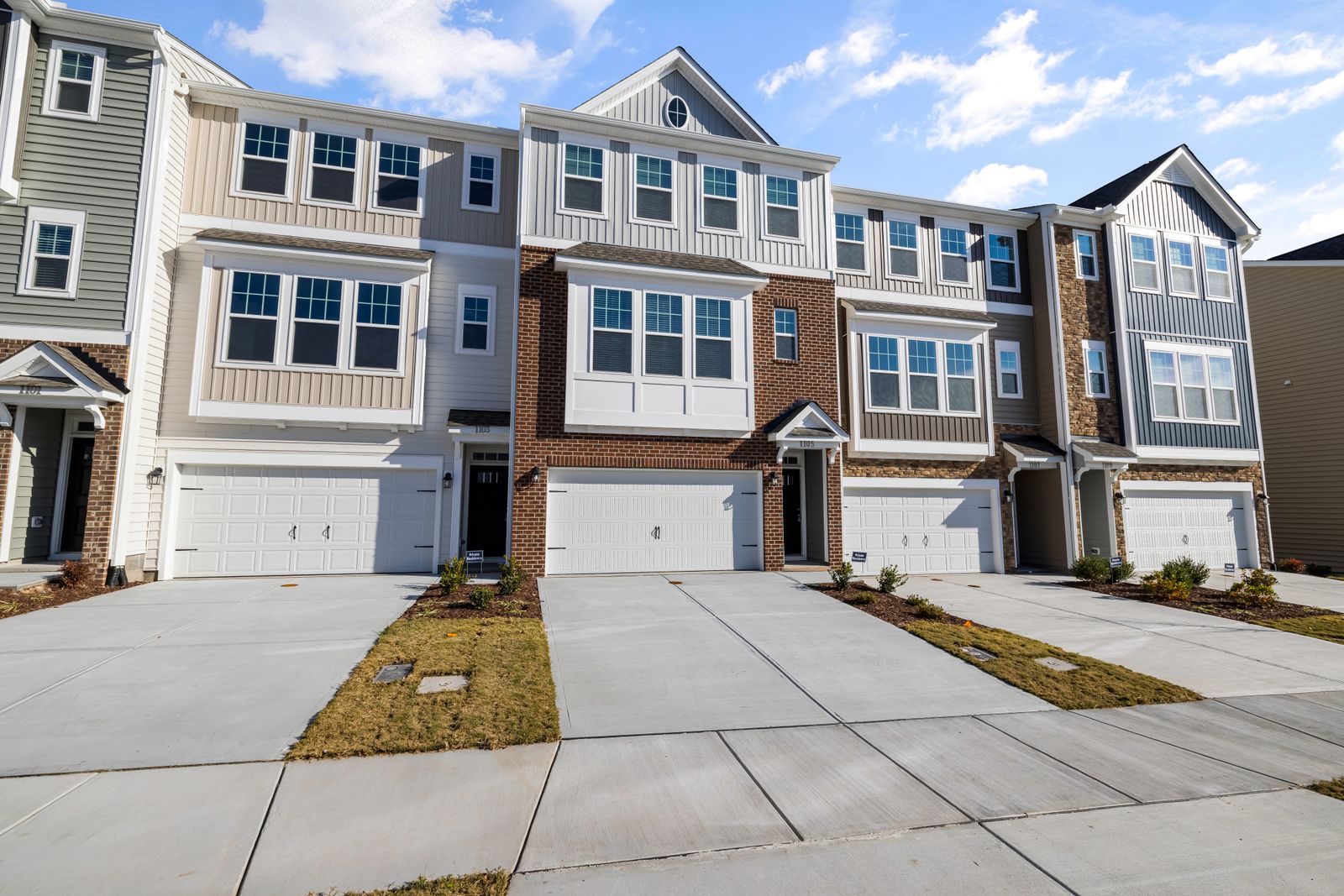
House hacking means you buy a property with more than one livable unit, live in one of them, and rent out the rest. Your tenants' rent covers part or all of your mortgage, taxes, and insurance. In the best case, your personal housing cost drops to zero and you build equity for free.
The classic version is a 2-4 unit building: a duplex, triplex, or fourplex. But the idea stretches wider than that. People house hack by renting out spare bedrooms, buying a home with a finished basement apartment, or renting a garage apartment. The principle is the same: your home pays for itself instead of only taking from your paycheck.
Why does 2026 still work for this? Two reasons. First, FHA loans let you buy a 2-4 unit property with just 3.5% down as long as you live in one unit as your primary residence. Second, single-family home prices have pushed many buyers toward multi-unit properties anyway, since the rental income helps you qualify for a bigger loan. Lenders typically count about 75% of projected rent from the other units toward your qualifying income, which can be the difference between approval and denial (FastExpert).
FHA Loan Rules for House Hacking in 2026
FHA loans are the engine of most house hacks because they're designed for first-time buyers with modest savings. Here are the rules that matter:
Down payment and credit
You need just 3.5% down if your credit score is 580 or higher. On a $300,000 duplex, that's $10,500 instead of the $60,000 a conventional 20% down payment would demand. That gap is the whole game. If your score is below 580, FHA can still work with 10% down, but the 3.5% figure is what makes house hacking realistic for most people (FastExpert).
Owner-occupancy requirement
You must live in one of the units as your primary residence for at least one year, and you have to move in within 60 days of closing. This isn't optional, and you shouldn't fake it. Lenders and the FHA take occupancy fraud seriously. One year of living next to your tenants is the price of admission (FastExpert).
The self-sufficiency test (triplex and fourplex only)
Here's a rule that surprises people. If you buy a triplex or fourplex with an FHA loan, the property must pass the self-sufficiency test: 75% of the fair market rent of ALL units (including yours) must cover the full monthly mortgage payment. A duplex does not have to pass this test, which is one reason duplexes are the simpler entry point (FastExpert).
Loan limits and rates
FHA 2026 loan limits for a 4-unit property run from $931,600 in low-cost areas up to $2.34 million in high-cost areas, so you're not boxed out of expensive markets entirely (mortgage-info.com). On rates: FHA 30-year fixed averaged around 6.47% APR in mid-2026. Remember that FHA loans also carry mortgage insurance premiums, both an upfront premium and an annual one, which adds to your monthly cost. Factor it into your math from day one (FastExpert).
The Real Math: A Worked Example
Let's stop talking in generalities and run the numbers on a realistic deal. This example comes from current FHA multi-family guidelines for 2026:
A $380,000 fourplex in Columbus, Ohio. You put 3.5% down, which is $13,300. Your monthly payment including principal, interest, taxes, and insurance (PITI) comes out to roughly $2,850. You live in one unit and rent the other three for $1,050 each, bringing in $3,150 a month. Your net housing cost: roughly zero. The tenants are covering the mortgage, taxes, and insurance, and every payment builds your equity (mortgage-info.com).

Now, that example is clean on paper. Real life adds costs: maintenance, occasional vacancies, that annual FHA mortgage insurance premium. A conservative rule is to assume 5% of rent lost to vacancies and budget about 1% of the property value per year for maintenance. Even with those haircuts, a well-bought fourplex in an affordable market typically leaves you paying a fraction of what renting would cost.
The bigger picture is what matters. While your tenants cover the mortgage, two things happen quietly in the background. First, your loan balance drops every month as principal gets paid down. Second, if the property appreciates even modestly, your equity grows on the full $380,000 value while you only put $13,300 in. That's leverage, and it's the actual wealth-building mechanism behind house hacking. Our Real Estate hub breaks down more of these wealth-building strategies, and if you're torn between buying a place to live in and one to rent out, read REITs vs Rental Property in 2026 before deciding.
Where House Hacking Works Best in 2026
House hacking works best where multi-unit properties are cheap relative to rents. In plain terms: you want a city where a duplex doesn't cost a fortune but tenants pay solid rent. Expensive coastal metros often fail this test. The Midwest and parts of the Northeast are where the numbers sing.
Rochester, New York is a good illustration: the median multifamily price there sits around $154,950, with 66 active listings, which means real inventory you can actually bid on rather than fighting ten buyers for one tired duplex (KION Central Coast). Markets like Columbus, Cleveland, Indianapolis, Kansas City, and Pittsburgh show similar patterns: affordable 2-4 unit stock with rents strong enough to make the math work.
How do you evaluate your own market? Look at the rent-to-price ratio. Take a typical fourplex's gross annual rent and divide by its price. If that number is 8% or higher, the market deserves a closer look. Below 5%, your mortgage will probably eat the rent and you'll be subsidizing your tenants instead of the other way around.
Duplex vs Triplex vs Fourplex
More units means more income, but it also means more complexity, more tenants, and in the case of triplexes and fourplexes, that FHA self-sufficiency test. Here's how they compare:
| Factor | Duplex | Triplex | Fourplex |
|---|---|---|---|
| Income streams | 1 tenant | 2 tenants | 3 tenants |
| Down payment (3.5% on $300K) | $10,500 | $10,500 | $10,500 |
| FHA self-sufficiency test | Not required | Required | Required |
| Vacancy risk | High: one vacancy = 100% of income gone | Medium | Low: one vacancy = 33% of income gone |
| Management effort | Lowest: one neighbor-tenant | Moderate | Highest: three tenants, more turnover |
| Best for | First-timers, privacy lovers | Balanced income and effort | Maximum cash flow, experienced hands |
My take: start with a duplex if this is your first property. It's the simplest financing (no self-sufficiency test), the fewest tenants to manage, and the easiest to resell. Once you've survived a year of landlording, you'll know whether you want more doors. For a deeper look at buying rental property as a beginner, see How to Buy Your First Rental Property in 2026.

The Risks: What Can Go Wrong
House hacking is genuinely one of the best wealth-building moves available to ordinary earners. It's also real landlording, and I won't pretend otherwise.
Vacancies hurt more than you expect
On a duplex, one empty unit means half your rental income vanishes overnight while the full mortgage still shows up on the 1st. Keep a cash reserve of at least three to six months of mortgage payments before you buy. This is non-negotiable. The people who get burned by house hacking are almost always the ones who bought with every last dollar and had no cushion.
You're the landlord, the neighbor, and the handyman
Living next to your tenants changes the dynamic. Some tenants will knock on your door instead of calling. Some will pay late and make eye contact with you at the mailbox. Set boundaries early: written leases, a clear maintenance request process, and rent collection through an app, not cash at the door. Professional systems protect both the relationship and your income.
Concentration risk
Your home and your investment are the same building, in the same neighborhood, subject to the same local job market. If the area declines, your equity and your rental income fall together. That's why market selection matters so much, and why you shouldn't overpay just to "get in the game."
FHA mortgage insurance
That 3.5% down comes with a cost: FHA mortgage insurance premiums, both upfront and annual, which inflate your monthly payment. On many house hacks the rent still covers it comfortably, but run your numbers with the insurance included. And know that refinancing into a conventional loan later, once you have 20% equity, can drop the insurance and lower your payment.

How to Start House Hacking: 7 Steps
1. Check your credit and savings
Pull your credit score. At 580+ you qualify for 3.5% down; higher scores get better rates. Add up your savings: down payment, closing costs (typically 2-5% of price), plus a 3-6 month reserve. That's your real budget.
2. Get pre-approved with an FHA-experienced lender
Not every lender is comfortable with 2-4 unit FHA loans. Ask specifically: "How many FHA 2-4 unit loans did you close last year?" If the answer is zero, find another lender. A good one will also explain how the 75% rental income credit affects your approval amount.
3. Pick your market and property type
Decide duplex vs triplex vs fourplex based on the comparison above, then learn one or two neighborhoods deeply. Drive them. Check rents on listings sites. Talk to local property managers about what units actually rent for, not what sellers claim.
4. Run the numbers conservatively
Use real rents (verified from comparable listings), subtract 5% for vacancy, add maintenance reserves, and include FHA mortgage insurance. If the deal only works with perfect occupancy and zero repairs, it's not a deal.
5. Make offers with inspection contingencies
Multi-unit sellers often expect investors to waive inspections. Don't. Your inspection contingency is your safety net against the $20,000 sewer line you can't see.
6. Close, move in within 60 days, and set up systems
Remember the FHA rule: you must occupy within 60 days and stay at least a year. Before tenants arrive, set up a separate bank account, a rent collection app, and a simple lease. Treat it like a small business from day one, because it is one.
7. Manage well, then repeat
After your one-year occupancy requirement, you can do it again: buy another multi-unit with another owner-occupied loan and keep the first as a full rental. This is how portfolios get built, one house hack at a time. Some investors repeat the cycle every year or two for a decade.
Relevant ads will appear here once AdSense is connected.
FAQ
Can I house hack with an FHA loan in 2026?
Yes. FHA loans allow 1-4 unit properties with 3.5% down (580+ credit) as long as you live in one unit as your primary residence for at least a year and move in within 60 days of closing. Triplexes and fourplexes must also pass the FHA self-sufficiency test (FastExpert).
How much money do I need to start house hacking?
Less than most people think. On a $300,000 duplex, 3.5% down is $10,500, plus closing costs of roughly $6,000-15,000 and a cash reserve. Down payment assistance programs can reduce the down payment further; over 2,600 DPA programs exist in 2026, and some, like the Chenoa Fund, cover the full 3.5% as a forgivable second (WalletInvestor).
Does rental income help me qualify for the mortgage?
Yes. Lenders typically count about 75% of the projected rent from the non-owner units toward your qualifying income. On a fourplex renting three units at $1,050 each, that's roughly $2,362 a month added to your income for qualification purposes (FastExpert).
What is the FHA self-sufficiency test?
For triplexes and fourplexes bought with FHA loans, 75% of the fair market rent of all units (including the one you live in) must be enough to cover the full monthly mortgage payment. Duplexes are exempt from this test, which makes them the simpler first purchase (FastExpert).
Can I house hack a single-family home?
Yes, though it's a different flavor. Renting out spare bedrooms, adding an accessory dwelling unit, or buying a home with a basement apartment all count. The FHA 3.5% advantage specifically shines on 2-4 unit properties, since single-family homes don't generate the same rental offset against the mortgage.
What happens after the one-year occupancy requirement?
After you've lived in the property for a year, you're free to move out and keep it as a full rental, or buy another owner-occupied multi-unit and repeat the process. Many investors chain house hacks every year or two to build a small portfolio with low down payments each time.
Your First Move This Week
Don't start by browsing listings. Start with your numbers. Pull your credit score, add up your savings, and call one lender who actually closes FHA 2-4 unit loans. Ask them what price range your income plus 75% of projected rents qualifies you for. That single conversation turns house hacking from a vague idea into a concrete budget, and everything after that is just shopping.
Then pick one market, learn its rents cold, and run five deals on paper before you tour a single property. The investors who make money in real estate are the ones who do the boring math before the exciting purchase. Browse more strategies in our Real Estate hub.
Relevant ads will appear here once AdSense is connected.