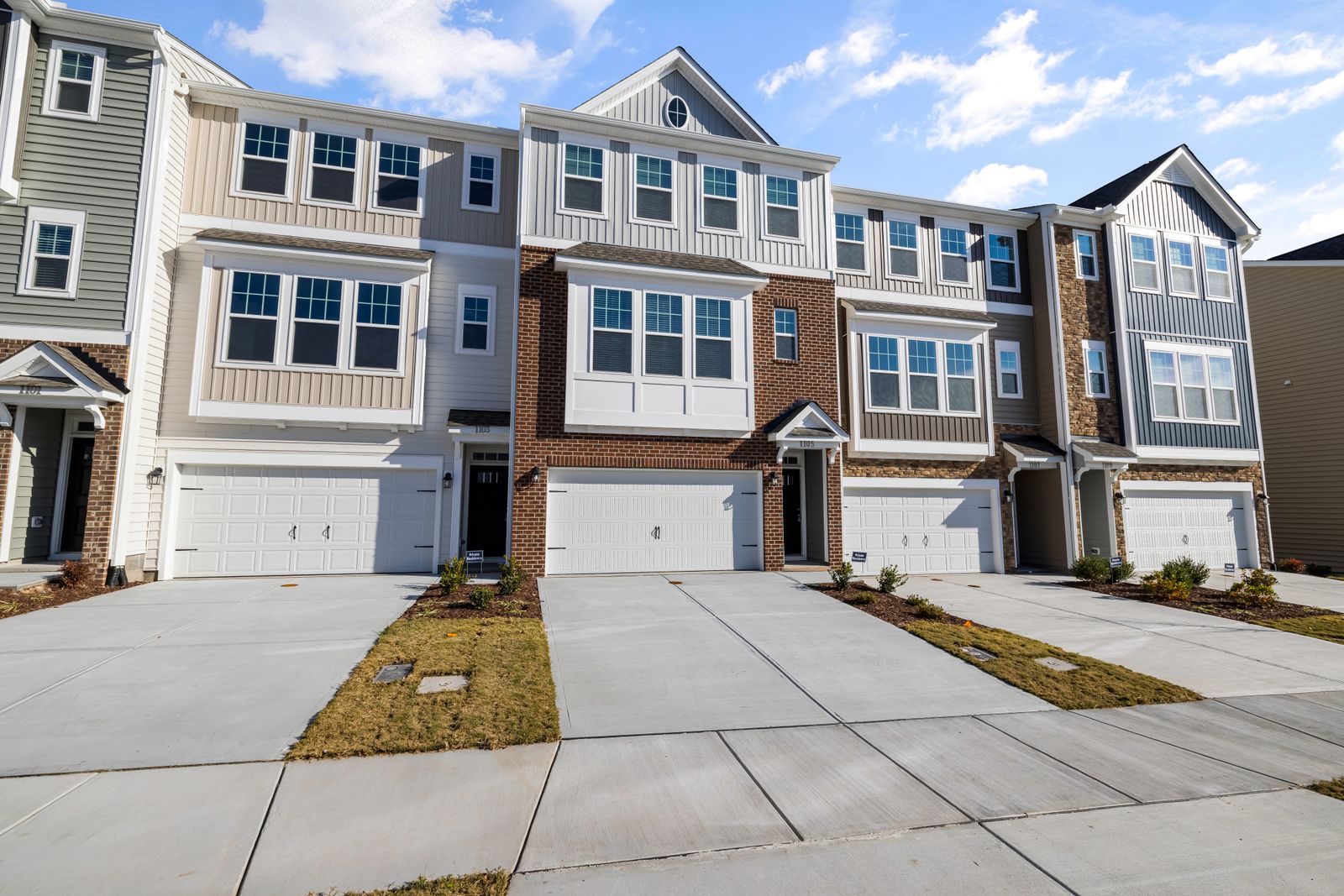
REITs vs Rental Property in 2026: Where Should You Put Your First $10,000?
A side-by-side look at yields, leverage, liquidity, and taxes, plus a simple decision framework so your first $10,000 lands where it actually fits.

Relevant ads will appear here once AdSense is connected.
I did both. In 2024 I put a few thousand dollars into a diversified REIT fund and sat on it. Separately, I ran the numbers on a $180,000 duplex in my city: 10% down, FHA, the works. Same starting capital, two very different rides. The REIT paid me quietly every quarter. The duplex plan needed a lease, a plumber on speed dial, and a stomach for midnight maintenance calls.
Neither option is "right." That's the whole point. REITs and rental property are both real estate investing, but they ask for different things from you: one asks for patience and a brokerage account, the other asks for cash, credit, and sweat. I've watched beginners pick wrong in both directions: buying a rental they couldn't afford to maintain, or dumping money into a REIT and expecting landlord-level returns.
This guide walks through both honestly: how each one actually makes money, what the 2026 numbers look like, and a decision framework you can use this week. By the end, you'll know exactly where your first $10,000 belongs.
How REITs Actually Work
A REIT, or Real Estate Investment Trust, is a company that owns income-producing real estate: apartments, offices, warehouses, malls, cell towers, data centers, and you can buy shares of it like a stock. Your $10,000 buys you a slice of a portfolio that would cost tens of millions to assemble directly.
The magic is in one rule: to keep its tax status, a REIT must pay out at least 90% of its taxable income to shareholders as dividends. That's why yields are high. Management companies can't hoard profits the way a regular corporation can. The income comes from tenants paying rent on the properties, minus expenses, and most of it flows straight to you.
What can you expect in 2026? All equity REITs averaged dividend yields around 3.7-4% as of February 2026, with diversified equity REITs commonly landing in the 4-6% range. Realty Income, the most famous name in the space, pays monthly dividends; most REITs pay quarterly. The sweet spot is real: yields of 3-6% are typical and sustainable, yields above 7-8% deserve real scrutiny, and mortgage REITs that advertise 8-12% carry much higher risk, per Marks Insights.
Buying is trivially easy. Open a brokerage account, search for a REIT ETF like VNQ or SCHH, and you're in. Minimum capital is effectively one share (under $100). You own the asset class by lunchtime.
How Rental Property Actually Makes Money
A rental property isn't one income stream. It's four, running at the same time. Once you see this, you understand why landlords put up with the headaches.
1. Cash flow
Cash flow is the rent left over after mortgage, taxes, insurance, maintenance, vacancies, and property management. In mature markets, net rental cash flow settles near 3-5% annually unless leverage is used. It's the least exciting of the four paths and the one most beginners overestimate.
2. Appreciation
The property's value rises over time. Landlords don't count on a fixed number, but in growing markets the property's price creeping up a few percent a year is the quiet engine of wealth. It's unrealized until you sell or refinance, so it doesn't pay this month's bills.
3. Loan paydown
Your tenants are paying your mortgage. Every month, part of their rent chips away at your loan balance, building your equity. This is invisible wealth: you don't feel it until you refinance or sell, but on a 30-year note it's enormous.
4. Tax benefits
Depreciation lets you write off a portion of the property's value against rental income each year, often making rental income look far smaller on paper than in your bank account. This is a genuine, legal advantage no REIT gives you in the same way.
Stack all four and landlords typically target combined annual returns of 8-12% over time. Notice the word "target." You'll have years where the water heater dies in January and the tenant leaves in March. If you want the full playbook on buying your first place, read our beginner's guide to buying a first rental property.
Returns: Head to Head
Let's put the numbers next to each other. Gross rental yields vary wildly by market: the USA runs 5-8%, the UK around 5-6%, and India just 2-3% (low yield, but historically strong appreciation). Those are gross figures. Net cash flow after costs is much lower, landing near that 3-5% figure in mature markets.
REITs, meanwhile, hand you 4-6% in dividends plus price appreciation on the shares. In India, analysts cited in 2026 put REIT total returns at 9-13% versus 3-7% net for direct real estate, a pattern that roughly holds elsewhere: REITs suit smaller investors, while direct property rewards bigger capital and patience.
Honest math on your $10,000: it buys a meaningful REIT position immediately, spinning off $400-600 a year in dividends while the shares ride market appreciation. That same $10,000 as a rental down payment barely exists in most US markets in 2026: it's a 3.5% down payment on a $285,000 home via FHA, which is really house hacking territory: live in one unit, rent the others, and have tenants cover your housing cost.

| Factor | REITs | Rental property |
|---|---|---|
| Minimum capital | One share (~$100 or less) | Down payment + closing + reserves ($10k+ at minimum, usually much more) |
| Typical yield | 4-6% dividends on equity REITs | 3-5% net cash flow in mature markets; 8-12% combined returns when all four profit paths stack |
| Liquidity | Sell in seconds on any trading day | Selling takes weeks to months, plus agent fees and closing costs |
| Effort | Near zero: buy, reinvest, hold | Tenants, repairs, vacancies, insurance, taxes: a part-time job, or 8-10% of rent to a manager |
| Leverage | Minimal: you earn on the capital you invest | 4:1 or 5:1 with a mortgage: your returns apply to the whole property, not just your down payment |
| Tax treatment | Dividends taxed as ordinary income (US); hold in a Roth IRA to skip that drag | Depreciation shields income; capital gains on sale; 1031 exchanges defer tax (US) |
| Best for | Hands-off investors, small capital, diversification | Those with capital, credit, local knowledge, and time to manage or fund management |
Liquidity and Effort
This is where the two options live on different planets. REITs trade like stocks. Click sell at 2pm and the cash settles in a couple of days. That liquidity has a cost, though: you'll feel every market wobble. REIT share prices swing with interest rates and stock market mood, even when the underlying buildings are doing fine.
Rental property is the opposite. Selling takes months and costs 6-8% of the price in agent commissions and closing costs. You can't panic-sell a duplex on a bad Tuesday, which is either a bug or a feature depending on your temperament. But you also can't quickly exit if the neighborhood declines or your life changes.
Effort follows the same split. A REIT portfolio needs maybe an hour a year: rebalance, check the dividend, done. A rental is a part-time job: screening tenants, handling repairs, chasing late rent, dealing with turnover. Hiring a property manager for 8-10% of rent buys back your time but eats straight into returns. For a fuller picture of how people cut housing costs while renting out space, our house hacking guide walks through the live-in-landlord route.

Leverage: Rental Property's Edge

Leverage is the single biggest reason rentals can beat REITs. You can't walk into a bank and borrow $400,000 to buy REIT shares. But you can borrow $400,000 to buy a $500,000 rental with $100,000 down. Now your returns apply to the full $500,000 asset, not your $100,000. If the property appreciates 4% in a year, that's $20,000 on your $100,000 down payment: a 20% return before costs.
The catch is that leverage works both ways. As the research puts it, leverage amplifies both gains and downside. If the property drops 10%, you just lost $50,000 on a $100,000 investment. And the mortgage has to be paid whether the unit is occupied or not. Vacancies hurt far more with debt than without.
REITs skip this game almost entirely. You earn on the capital you put in, no more, no less. Boring, but there's no margin call at 3am when a tenant leaves.
Taxes (Don't Skip This)
Taxes quietly decide a lot of this comparison. REIT dividends are mostly taxed as ordinary income in the US, not at the lower qualified-dividend rate, so a 5% yield can become 3.5% after tax depending on your bracket. The workaround is simple: hold REITs in a Roth IRA, where qualified withdrawals are tax-free and the dividend drag disappears.
Direct property has the better-known tax toolkit. Depreciation lets you deduct a slice of the building's value each year against rental income. On paper your profit can shrink dramatically while the cash stays in your account. Sell later and you face capital gains tax, but US investors can use a 1031 exchange to roll proceeds into another property and defer the tax bill entirely.
Which wins on taxes? For a buy-and-hold landlord, depreciation is genuinely powerful and hard to match. For a hands-off investor, the Roth IRA makes REITs tax-clean with zero paperwork. Your bracket and your willingness to do tax filings should be part of the decision.
Who Should Pick Which: A Decision Framework
Forget "which is better." Ask which investor you are.
Pick REITs if…
You have $10,000 and want it working this week. You're busy, you value liquidity, and you don't want a second job. You want exposure to commercial real estate: warehouses, data centers, medical offices, which you'd never buy directly. Our Real Estate hub covers more ways to start with small capital.
Pick rental property if…
You have the down payment plus a six-month reserve, decent credit, and either time or money for management. You're comfortable with local markets: you know which streets are rising and which aren't. You want control: to renovate, to raise rents, to choose tenants, to force appreciation. And you want leverage multiplying your returns.
The hybrid most beginners should consider
Here's the honest answer for the $10,000 question: do both, in sequence. Put the $10,000 into REITs now, where it starts compounding immediately. Keep saving and learning: track listings, underwrite fake deals, build reserves, and when you have the capital and the knowledge, buy your first rental. The REIT position becomes your reserve fund or your next down payment. No years lost to "saving up" while inflation eats your cash.

Relevant ads will appear here once AdSense is connected.
FAQ
Can I really start investing in real estate with $10,000?
Yes, but through REITs, not direct property. $10,000 buys a diversified REIT position immediately and starts paying dividends. As a rental down payment, $10,000 is thin in most 2026 markets: it can work with an FHA loan and a house-hack strategy, but you'd have almost no reserves left, which is risky.
Are REITs as profitable as rental property?
Over long periods they're surprisingly close on a total-return basis. Rental property can pull ahead when leverage, forced appreciation, and tax benefits stack up, but that requires skill, capital, and work. REITs deliver their returns with zero effort and full diversification from day one.
Do REITs pay monthly or quarterly?
Most REITs pay quarterly. A few, famously Realty Income, pay monthly. If monthly cash flow matters to you, look for monthly payers or simply set your brokerage to sweep quarterly dividends into your account on a schedule.
What are the biggest risks of rental property?
Vacancies, bad tenants, unexpected repairs, and leverage cutting the wrong way. A single bad tenant or a $15,000 roof can wipe out years of cash flow. That's why reserves and insurance aren't optional. They're the price of admission.
What are the biggest risks of REITs?
Interest rate sensitivity (REIT prices often fall when rates rise), sector downturns like office space struggling post-remote-work, and dividend cuts if a REIT's tenants can't pay. High headline yields above 7-8% often signal one of these risks hiding underneath.
Can I hold REITs in a retirement account?
Yes, and it's one of the smartest moves in this whole comparison. Because REIT dividends are taxed as ordinary income in taxable accounts, holding them in a Roth IRA removes that tax drag entirely in the US.
Your Move This Week
If you've got $10,000 sitting in savings earning next to nothing, the worst choice is no choice. Open a brokerage account this week and put the money into a diversified REIT ETF: you can be invested before dinner. That's not the final answer, it's the first step: your money starts compounding while you learn.
Then do the real work. Pick a neighborhood, track ten listings, run the numbers with all four profit paths, and talk to two landlords. When the math and your reserves both say yes, buy the rental. Most wealthy real estate investors end up owning both: REITs for liquidity and diversification, direct property for leverage and control. Your first $10,000 just decides which door you walk through first.
Relevant ads will appear here once AdSense is connected.